


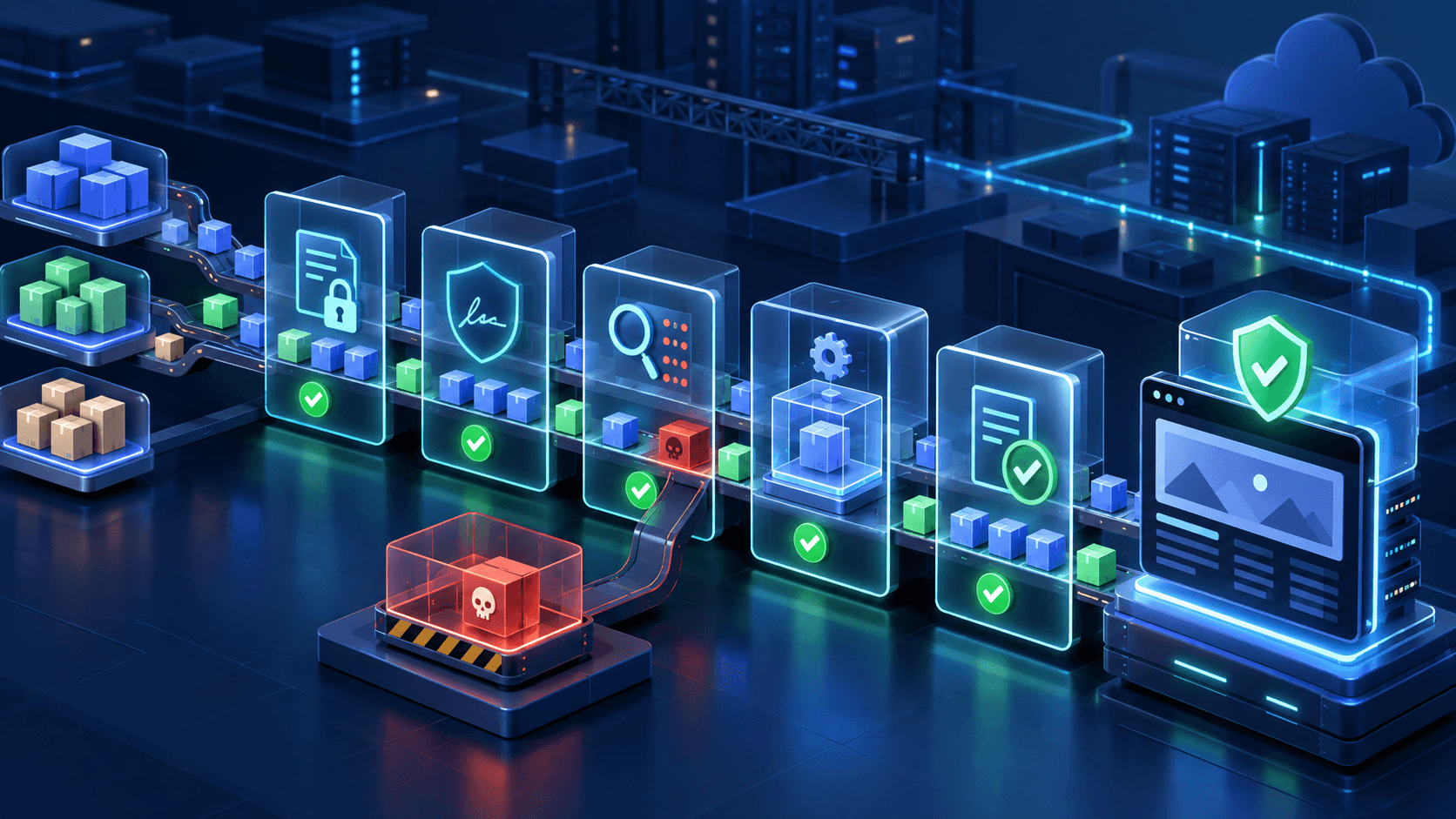
Treat every dependency as executable supply-chain input
A Next.js application includes production packages, build tools, framework plugins, transitive libraries, container layers, CI actions, and deployment integrations. Any of them can execute during installation, build, test, or runtime. Start by documenting what enters the artifact and who owns updates.
Runtime
Framework, server libraries, database clients, authentication, parsing, and provider SDKs.
Build time
Compilers, CSS tools, image transforms, linters, test runners, and post-install scripts.
Delivery
CI actions, container bases, registries, deployment CLIs, and infrastructure modules.
Remove packages that duplicate platform features or are no longer imported. A smaller graph reduces patching work, attack surface, install time, and incident scope.
Make dependency resolution reviewable and reproducible
Commit exactly one lockfile and use the package manager's frozen or clean-install mode in CI. A manifest range describes allowed versions; the lockfile records the resolved graph. Review unexpected lockfile changes as code changes.
# Example CI principle: fail if the lockfile cannot be honored
npm ci
npm test
npm run build
Pin the package-manager version used by developers and CI. Do not regenerate a lockfile casually during an unrelated feature. Restrict alternative registries and document any private registry fallback so a namespace cannot silently resolve from the public ecosystem.
Limit code execution during installation
Package lifecycle scripts can run with the developer or CI identity before application code is reviewed. Inventory packages that require native builds or post-install work, and investigate new scripts introduced by an update.
Prefer clean ephemeral runners, restrict outbound network access where practical, and never expose unrelated cloud, signing, or deployment credentials to dependency installation.
Patch continuously without turning upgrades into emergencies
Automate small dependency pull requests with changelog links, risk labels, and the relevant test suite. Group low-risk development tools separately from framework, authentication, database, build, and runtime upgrades. Define owners and response targets for critical vulnerabilities.
- Confirm whether an advisory affects the code path and deployed version.
- Review maintainers, release history, package provenance, and sudden ownership changes.
- Test the production build and representative routes before merging.
- Keep rollback artifacts and avoid mixing major upgrades with unrelated features.
Framework upgrades deserve the measured release controls in our Next.js rollout guide.
Use scanning as triage, not a checkbox
Scan the resolved dependency graph, container layers, secrets, licenses, and build artifact. Produce a software bill of materials for the deployed release and retain it beside the artifact so an incident can answer what was actually running.
Prioritize by reachability, exploitability, internet exposure, available controls, and data sensitivity—not severity score alone. Record accepted risk with an owner and expiry date. False positives should be documented, not silently ignored forever.
Promote the tested artifact instead of rebuilding it
Build once in an isolated environment, attach source revision and dependency evidence, sign or attest the artifact where supported, and promote that same artifact through environments. Rebuilding for production can resolve different inputs or run compromised tooling after tests have passed.
- Pin CI actions and container bases to immutable versions or digests.
- Verify checksums and signatures before deployment.
- Separate build, approval, and production-deploy identities.
- Record who approved and deployed each release.
Prepare for a compromised package before it happens
Maintain a path to search releases by dependency version, disable affected features, rotate exposed credentials, rebuild from trusted inputs, and verify the resulting artifact. Do not assume removing the package reverses data access or secrets already obtained during a compromised build.
Correlate releases, CI evidence, runtime signals, and audit history using our Next.js observability guide and audit logging guide.
Next.js supply-chain security checklist
✓ Unused dependencies are removed
✓ CI honors one committed lockfile
✓ New install scripts receive review
✓ Build credentials are short-lived and scoped
✓ Updates are small, owned, and tested
✓ Deployed releases retain an SBOM
✓ Tested artifacts are promoted without rebuilding
✓ Package incidents have a rehearsed response
Build a more dependable Next.js application
Endurance Softwares helps teams design, build, test, and operate production-ready Next.js platforms.